FASTING BOX STUDY
How the body reacts to the
5-day FASTING BOX programme
NEW INSIGHTS FROM RESEARCH
When fasting becomes part of everyday life
Fasting works, as we know from more than 100 years’ experience with the Buchinger Wilhelmi method. But can these effects be evaluated scientifically when fasting is part of day-to-day life? This is the subject of a new study on the Buchinger Wilhelmi FASTING BOX. Carried out as a randomised controlled trial, it examined how a clearly structured fasting programme for use at home affects key metabolic parameters. The results show that even outside the clinic environment, measurable metabolic changes occur that are comparable with the effects of fasting for five days in the clinic. The study is therefore the first to provide a scientific basis for a fasting plan that can be incorporated in people’s everyday routine and combines a structured approach, dietary support and medically sound principles.
Structure of the study
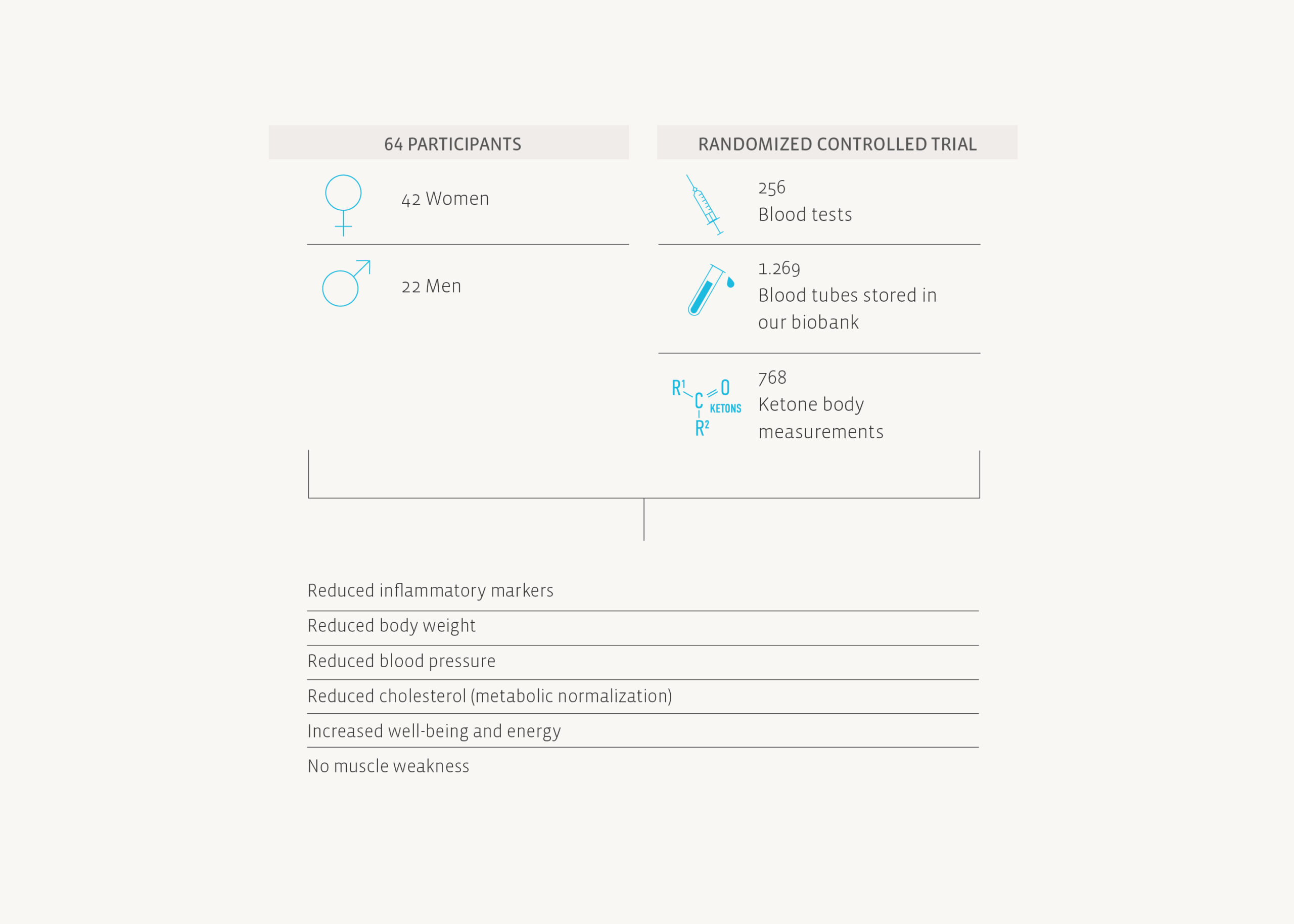
To assess the effects of the FASTING BOX using scientific methods, a randomised controlled trial was performed involving a total of 64 participants, including 42 women and 22 men between the ages of 20 and 75. The aim was to systematically record metabolic changes, inflammation markers and the transition to ketosis.
During the course of the study, blood values were regularly analysed, ketone bodies measured and samples stored long-term in the biobank. This provided a comprehensive picture of how the body adapts during and after the FASTING BOX programme.
What was observed?
An analysis of the data from the study revealed significant changes in key health parameters. This showed that the metabolic effects achieved with the FASTING BOX were comparable to five days of traditional fasting.
We observed the following, among other things:
→ Fewer inflammation markers
→ Reduced body weight
→ Lower blood pressure
→ Reduced cholesterol (normalised metabolism)
→ Increased well-being and energy boost
→ No muscle weakness
Other observed effects: energy, well-being and heart health
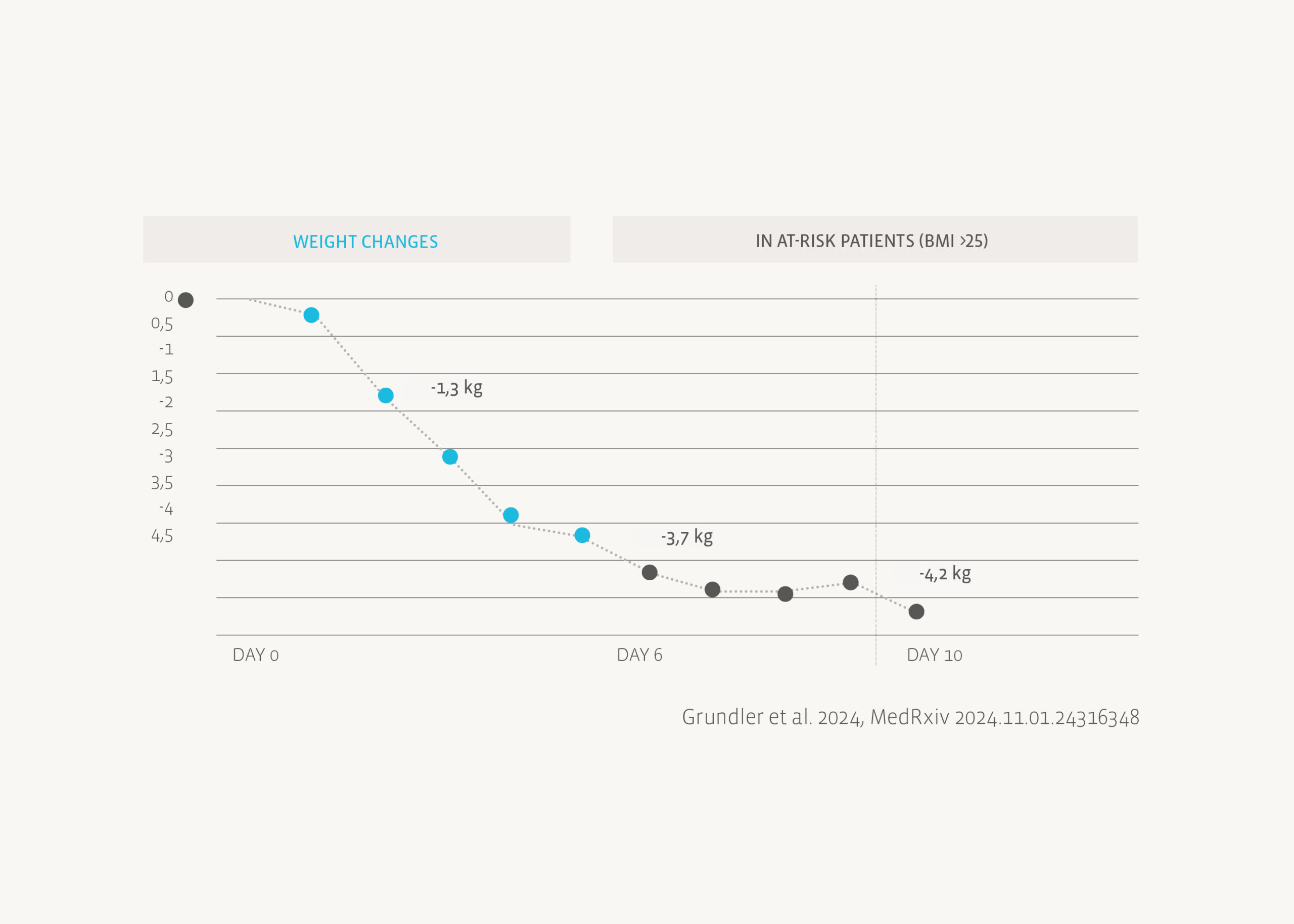
In addition to metabolic adjustments, we observed noticeable changes in participants’ subjective experience and cardiovascular parameters during the FASTING BOX programme. After evaluating the questionnaire, it was clear that many participants reported feeling more energetic and generally much better during the five days of the fasting programme. Many continued to experience this increased sense of well-being after the end of the fasting phase.
At the same time, we documented clinically relevant changes in blood values. Participants with an elevated baseline risk in particular showed a significant decrease in LDL cholesterol, a parameter closely linked to cardiovascular risk. Systolic blood pressure also dropped measurably over the course of the study, indicating reduced strain on the cardiovascular system.
These results supplement the metabolic findings and make it clear that the FASTING BOX not only influences metabolic processes, but can also boost energy levels, well-being and heart health – even within a clearly defined fasting programme designed for everyday use at home.
Ketosis: A key mechanism of fasting
A key feature of fasting is that it leads to ketosis. Ketosis causes the body to switch its energy metabolism and use more fatty acids and ketone bodies for energy rather than glucose. As the results of the study show, even though ketosis may be more intense and pronounced in prolonged fasting, the body nevertheless enters ketosis within the five days of the FASTING BOX. To document this, ketone bodies were measured a total of 768 times.
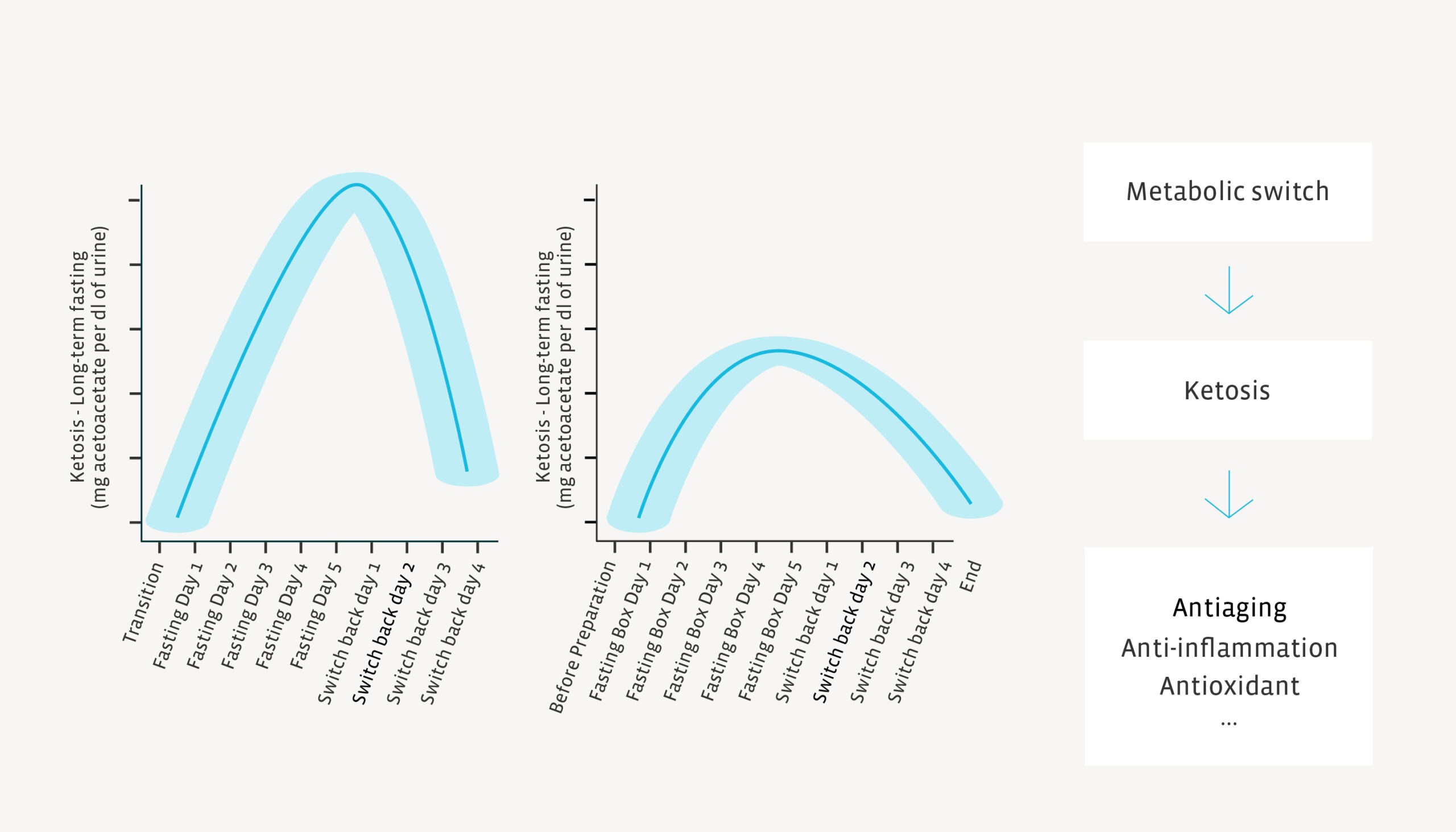
Ketosis is a metabolic state that enables the body to burn more fat, is associated with inflammation-modulating effects and promotes metabolic flexibility. In addition, research links ketone bodies to antioxidant mechanisms that protect cells, and the ketogenic metabolic state is thought to play a role in supporting healthy anti-ageing processes. This explains why it was possible to observe measurable effects in a structured fasting programme for use at home.
Fasting suited to everyday life with measurable effects
A key feature of the FASTING BOX is that it involves a higher daily calorie intake compared to fasting in the clinic. The programme has been purposely designed with around 600-670 kcal per day to make it easier to incorporate in people’s daily routine without losing the desired metabolic effects.
The study shows that this approach works: Despite the demands of day-to-day life, work and family, it resulted in clearly measurable changes in the metabolism.

Conclusion: What does this imply for people at home?
The results of the FASTING BOX study provide an important assessment. A clearly structured, scientifically developed fasting programme for use at home can activate key metabolic processes without the intensity of classical prolonged fasting.
The focus is not on imposing maximum restrictions, but rather on:
> Structure
> Predictability
> Easing the strain on the metabolism
> Conscious transitions (transition & restart days)
This is where the FASTING BOX comes in. The study shows that fasting at home can be more than an individual experiment. Under clearly defined conditions, it can trigger metabolic effects that are comparable to fasting for five days. For people who prefer to incorporate fasting in their day-to-day life in a way that is structured and backed by scientific evidence, this study provides a sound basis and an insight into the physiological processes that occur during the FASTING BOX programme.